
Eduwashing: how developers make their apps seem more educational
Many apps that you can find on the online market place for children are marketed as ‘educational’. Some apps, however, are more educational than others. It is not always easy to tell without trying them first. App developers have an interest in making their apps seem more educational, as parents and educators are more likely to download them. There are different ways in which companies do this.
1. Tagging an app as educational
The first – and probably easiest way – is for developers to list their app as educational on the app marketplaces. The marketplaces do not have any processes in place to check if an app is indeed educational or not. We found a range of apps with questionable or limited educational relevance, such as Toca Boca World, Balloon Pop and the Lego Duplo series.
2. Use of ‘educational’ buzzwords
The descriptions on the online marketplaces (Apple App Store, Google Play, Amazon Marketplace) are provided by the developers of the apps. This means that they are promotional tools. Developers often use educational buzz words such as “social-emotional learning”, “problem solving skills”, and “life-long learning”. The problem is that these words can apply to a lot of different things and do not necessarily reflect the educational value of these apps.
3. Partnerships with educational institutions
Fostering partnership with well-recognised educational brands is a good strategy to make an app seem educationally sound. The popular app, Reading Eggs, for instance, partnered with the ABC (Australian Broadcasting Corporation) to distribute the app. Reading Eggs is sometimes referred to as ABC Reading Eggs. The ABC was not involved in the development of the app, but some parents and educators we spoke with, did thing this was the case.
4. Commission ‘evidence’ from universities or companies
Especially the bigger edtech companies pay universities or companies to do studies on their products. These studies are then used to tell you that apps are evidence-based. We looked at the studies commissioned by the developers of the popular app Lingokids and we found that the claims made in promotional material about the efficiency or effectiveness of the app are widely exaggerated.
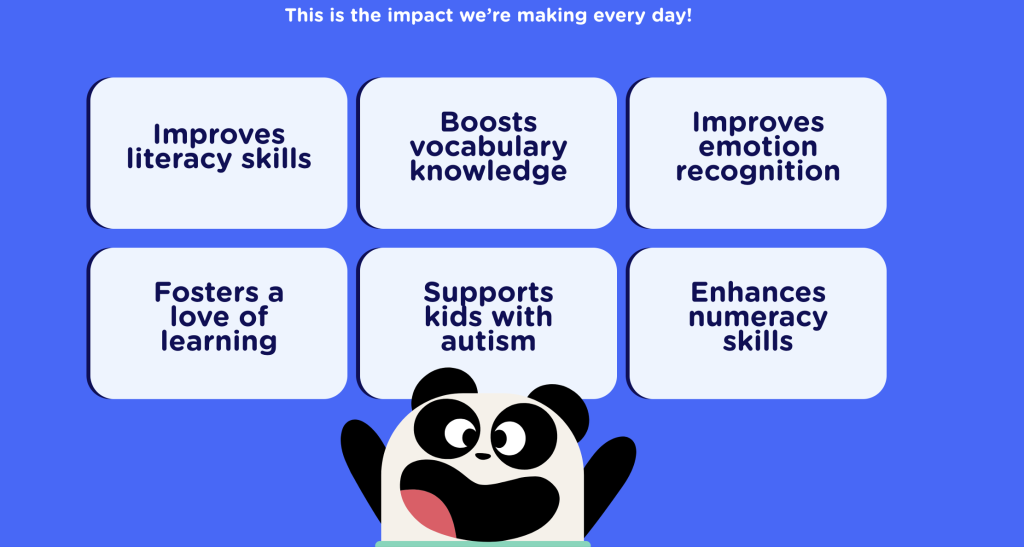
5. The use of certifications and labels
You may have noticed that apps sometimes have certification or endorsements, such as a Mom’s Choice Award or the KidSAFE seal. It is good to know that developers pay for these labels. This does not many that any product automatically gets ‘approved’. But having a lot of labels does not necessarily reflect how good an app is. It mostly just reflects that a company has more money to spend.
We wrote another article about the Google Teacher Approved Label.
How to choose good apps?
Unfortunately, it is difficult to find out which apps are good, especially since there are so many of them! We don’t think Reading Eggs or Lingokids are necessarily bad apps, but the companies behind them have more money and resources to make their apps look educationally sound. There might be other apps that are equally good or better. It is worth trying out an app first or go after advice from others, such as other parents or educators. There are also independent comparison websites, such as Children and Media Australia.

Chris Zomer
Deakin University
Andy Zhao
Deakin University
Melissa De La Cruz
Deakin University


